|
By Jerry Tardif
Horses sometimes get bitten by snakes.
This can happen at the barn, grazing pasture, or out on the trail.
It's important not to waste time if you even suspect your horse was bitten.
As in all medical matters, you need to contact your veterinarian as soon as possible.
The first thing is to determine how you know your horse was bitten.
If you see the bite happen, then you know.
If you don't see it happen, here are some symptoms of a snake bite:
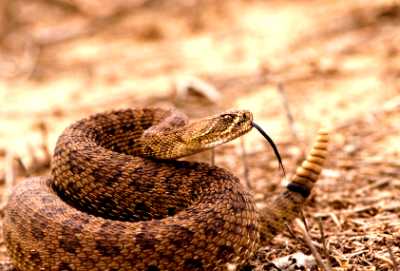
A denizen of the Trail
Snakebite Symptoms:
Because a horse is covered with hair, it's often not as easy to see bite marks as it would be on a human, so knowing the symptoms of a bite is the next best thing to look for.
These are some of the most common symptoms:
- You notice swelling of some area of your horse's body and closer inspection reveals two fang marks at the center of the swollen area.
Most bites occur to those parts of the horse nearest the ground, such as the legs or the nose while grazing.
If bitten on the face or head, there will usually be quite a bit of swelling near the bite marks and expanding away from them.
It will likely be even more noticeable than on other parts of the body.
- The affected area is in pain and sensitive to the touch.
- Breathing difficulties or very fast breathing
- Tremors
- Convulsions
- Muscle spasms
- Excessive sweating
- Excessive salivating
- If the bite occurred at the legs, your horse may act lame for no previously known reason.
- Paralysis
If any of the foregoing makes you suspect a snake bite or you actually saw your horse get bitten, FIRST, don't panic.
It's important for your horse that you remain calm.
It won't help one bit if you become hysterical and make your horse upset.
That will make him anxious, move around more, and better pump the toxin through his body — YOU DON'T WANT THIS!
What to Do:
- CALL YOUR VET IMMEDIATELY and explain what you see, the symptoms, and possible marks your see at the bite.
Losing precious time after a toxic snake bite could lose your horse its life.
- Halter your horse, stay with him, and keep him calm.
The less he moves around, the less snake venom he's likely to absorb.
- DON"T apply ice.
- DON'T try to cut open the area around the bite marks or suck the venom out with a snake bite kit unless you've been trained how to do so by a veterinarian.
That action is only helpful in the first couple of minutes after the bite and must be performed properly.
Doing so improperly will make matters worse by actually pushing venom into the bloodstream, and speed the spread of the toxin.
- Don't touch the affected area, you increase the chances of helping the venom spread and causing tissue damage and additional pain.
- If you saw the bite occur, try to identify the kind of snake, if possible.
It will be valuable for the vet to know.
- If see swelling in the face, it also means that swelling is squeezing on your horse's nostrils and making it hard to breath.
You can help him by acting quickly.
After calling the vet immediately, cut two pieces of garden hose 4-5 inches long and insert them into your horse's nostrils so he can keep breathing.
Some Points to Consider:
- Snake bites are generally not that common, so what you think is a bite usually is not.
An exception might be in a heavily infested area where there are many reports of bites to people and animals, but it's otherwise somewhat rare.
- Actual bites, when they occur, are more often from non-venomous snakes.
- When an actual bite from a venomous snake occurs, it doesn't mean your horse is automatically at risk of losing his life.
The snake may have made contact, but wasn't able to inject venom.
HOWEVER, don't depend on the foregoing to let you make a judgment as to whether or not to call your vet — CALL YOUR VET regardless of what you think happened or even if you think it was a nonpoisonous snake.
You don't want to waste precious time, find out you were wrong and your horse did receive an injection of venom from a poisonous snake, and then have your horse sustain tissue damage or die.
At the risk of overkill, it bears repeating that the key with snake bites and all major injuries or illnesses with horses is the same as with people — DON'T PANIC.
If you do, you waste time, upset your horse with the attendant risk of making the matter worse, and you can make poor decisions that can result in the loss of your horse.
Stay calm, have a plan, have your vet's phone number already stored in your barn phone or cell phone (have it with you), and make the call as soon as you suspect a bite.
You can make a more thorough examination while your vet in enroute.
Besides being an avid trail rider, Jerry Tardif is a technology consultant and a horse and nature photographer in SE Connecticut — see his work at: www.jerrytardif.com.
He is also co-founder and President of QueryHorse.
Back to Article Index
|